What are you looking for?


19. The Battlement Walk
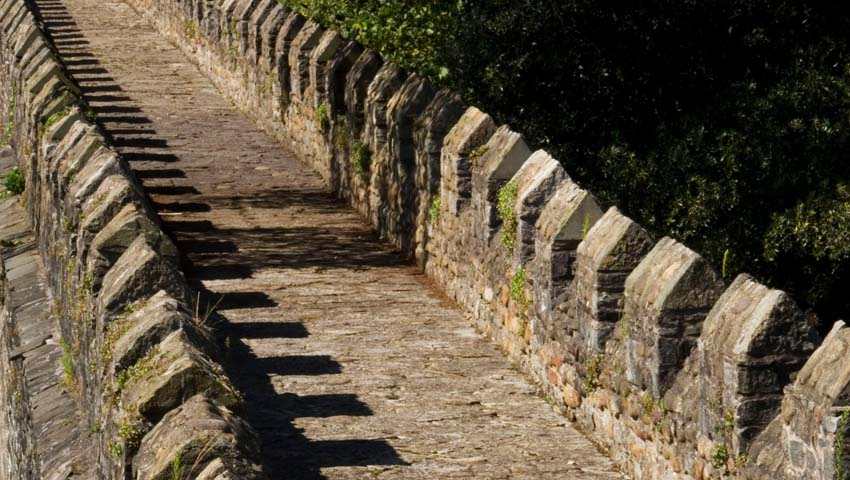
This walkway around the perimeter walls connects us with the oldest part of Cardiff Castle’s long history.
In 1888, some workmen employed by the 3rd Marquess of Bute were digging here on the east side. They discovered the remains of a wall – about 1.3 metres high and 3 meters thick – which clearly belonged to a Roman fortress.
Before this time it had always been believed the Castle was no older than the Norman period – when the Keep was built. This amazing discovery pushed back the Castle’s known history by a thousand years.
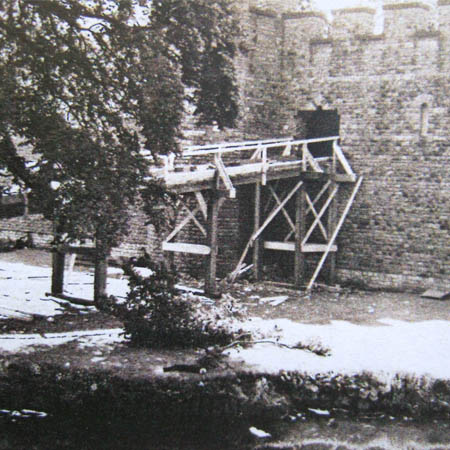
Bute took the decision to reconstruct the Roman walls. It was a huge undertaking and one that would dramatically change the Castle’s appearance. But Bute had both the vision, and the wealth, to carry it through. The work was begun in 1897 and finished by his son – the 4th Marquess – in 1923.
Many buildings in front of the Castle were also demolished around this time, so the Roman walls could be seen from the street.
Have a good look at the exterior walls when you leave. You can see the extent of the original Roman stonework very clearly. It’s marked by a band of red stone. Above this the stone work is all new.
You can also see the Roman walls clearly inside the Interpretation Centre where you came in.
There have been several more recent excavations in the Castle since Lord Bute’s time. And our knowledge of its Roman history is now far more complete.
Dr Peter Webster, an archaeologist at Cardiff University, has been involved with the digs carried out in the Castle for over thirty years.
“In the 1970s and 1980s we had chance to excavate one half of the castle. This was a fortunate coincidence really… there was a horseshow here… if you can imagine a horseshow in the wet summer in Cardiff, the grass was very churned up and the opportunity was there to excavate before they reinstated it, essentially. And we did this across nearly ten seasons I think.
Obviously, there are certain things we normally expect to see in Roman forts but when we started we had no idea what we would find…”