What are you looking for?


20. Wartime Tunnels
These tunnels were first opened up in the 1880s as galleries to allow the newly-discovered Roman walls to be seen. But they found a completely new and unexpected use in 1939, when the Second World War broke out. Knowing that britain was likely to suffer attack from the skies above, the walls became air-raid shelters for the people of Cardiff. many public air-raid shelters were concrete structures; hastily built and not particularly effective. People living in cities often relied instead on ‘Anderson’ shelters built partially underground in their own back gardens. The Marquess of Bute was only too pleased to be able to offer the strong outer walls of his castle as a unique public shelter for Cardiff.
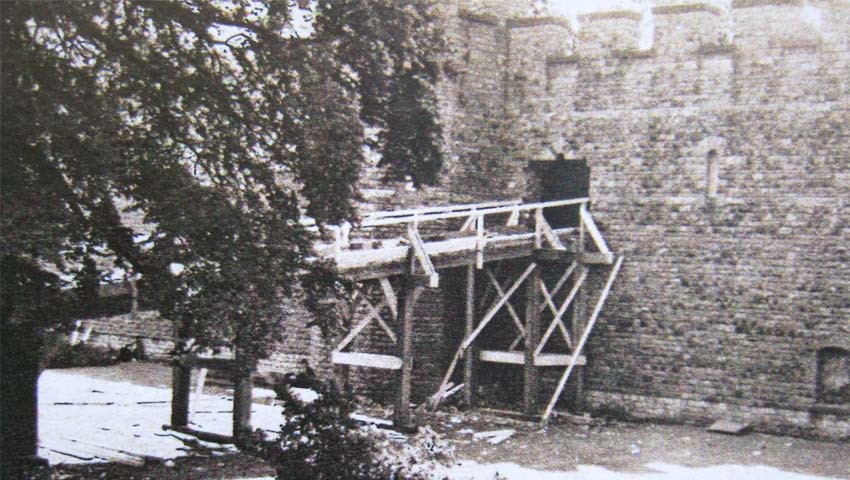
Entrances were broken through the stonework from the outside, enabling up to 1800 people to hurry up large wooden ramps from the busy streets below when the sirens sounded. To minimise blast, the galleries were partitioned into sections, with double brick walls dividing off each area.
Air-raids often took place at night and bunk beds were installed in some areas to create ‘dormitory’ shelters. These would have been cold and very damp, as the galleries leaked badly. As you’ll see, the bunks we’ve installed are bare of bedding; people were expected to bring their own. A ‘Shelter Marshall’ kept order and there was a small kitch to serve hot drinks and some food, as well as posts for the air-raid warden and for first-aid.
When the War ended in 1945, Lord Bute insisted that the galleries were put back exactly as they had been before the hostilities, so the wooden entrance ramps were removed, the exterior stonework was replaced, and the blast walls were taken down. But whilst they were needed, the Castle wall shelters provided a real service to the people of the city.