What are you looking for?


8. The “Shell” Keep

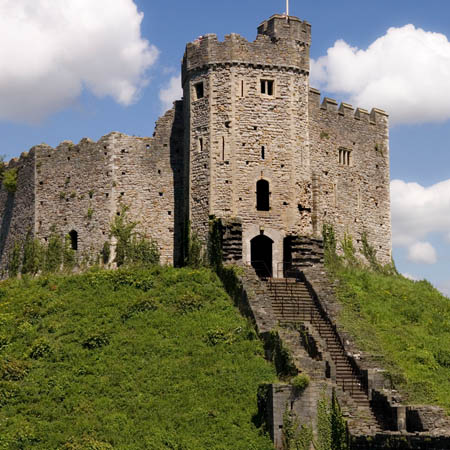
Castle keeps come in many shapes and sizes. This hollow, roofless building is known as a ‘Shell Keep’.
Take a look around these great walls: they’re nearly 2 metres thick.
The Keep may look circular but it is in fact 12-sided. And it measures a vast 23 and a half metres across.
The Shell Keep is empty now but, once, it held a cluster of wooden domestic buildings – sheltering against the massive stone walls. We know there was a Great Hall here, for instance, in medieval times.
These internal buildings were demolished long ago; but you can still find evidence of them if you know where to look.
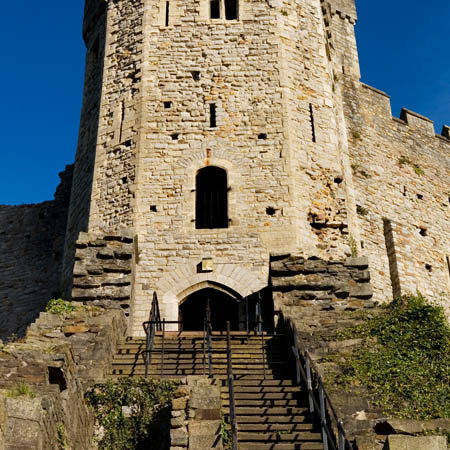
Do you see the square holes all around the walls? These are ‘putt-log’ holes: they once held wooden beams from these lost buildings. And notice the big, bottle-shaped cavity: that was probably a fireplace, or chimney.
Near the top, you can see the remains of a steep spiral stairway. This led up to the ramparts where the castle guards kept constant watch.
One night in 1158, however, someone managed to beat the security system. Ifor Bach was a tenant of the Lord of Cardiff Castle, who had taken away land rightfully belonging to Ifor Bach under Welsh law.
Although he was a small man, Ifor was extremely courageous. Using ladders, he managed to scale these steep castle walls. And, escaping the attention of more than 100 armed men and a great many archers, he abducted the Lord, his Countess, and their young son. He then held them captive in the woods, refusing to release them until his confiscated lands were returned to him.
As well as looking out for surprise attackers, the guards also had prisoners to keep an eye on. The most famous prisoner to have been held here in the Keep was Robert Curthose, Duke of Normandy, the eldest son of William the Conqueror.
Matthew Williams, former Curator of Cardiff Castle said:
‘There was a great legend for years that he was imprisoned in the Black Tower… But, in fact, he was almost certainly imprisoned in the Keep. And it would at that stage not have been the stone Keep. It would have been the wooden Keep. He was imprisoned for the last 8 years of his life. He died at the age of 80 – which was a great age at that time.
There were various descriptions of how he was treated. Of course, we don’t actually know, but he was after all a royal prisoner and chances are that to live to the age of 80, you wouldn’t have been malnourished or anything like that!”